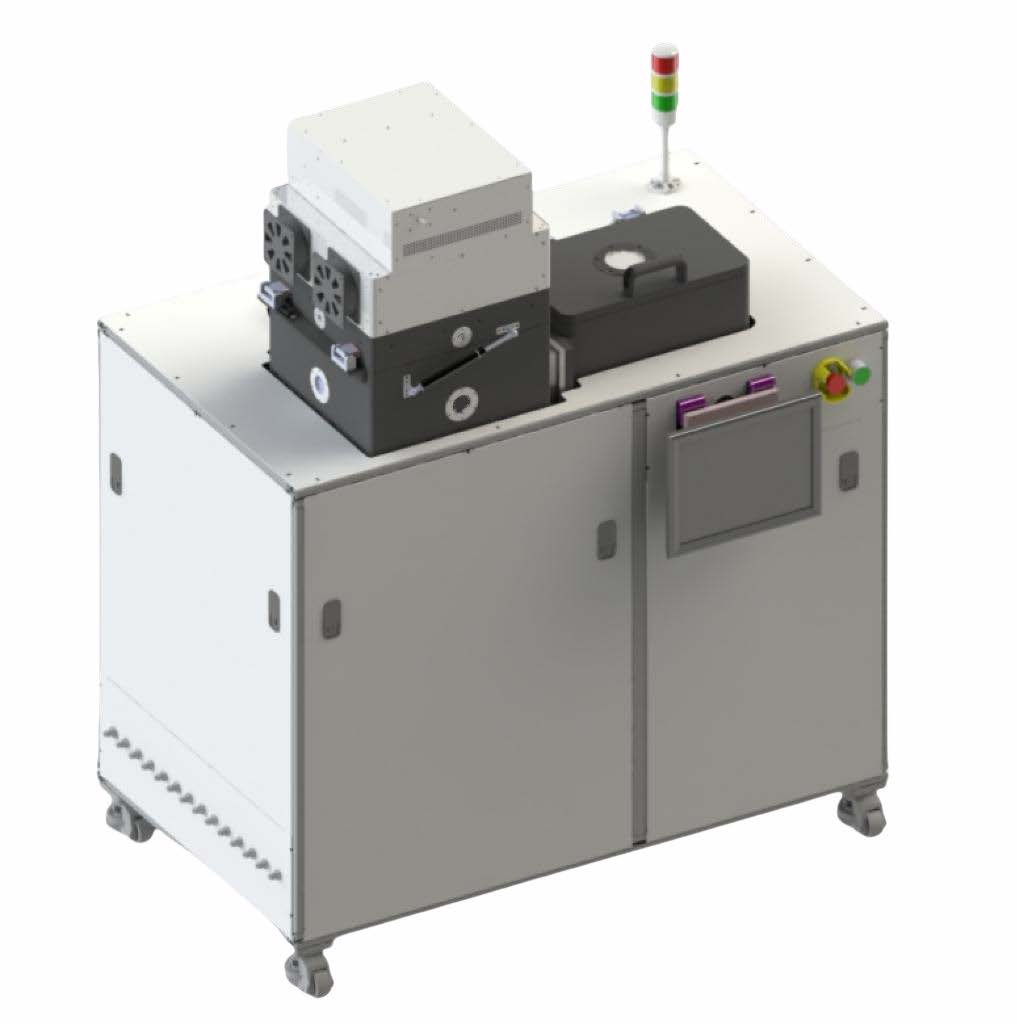
scalability ready long term support pecvd system agreements?

Central Ideas regarding ion-assisted etching within semiconductor fabrication. This strategy exploits ionic medium to targetedly extract substrate layers for exact layout creation during microscale production. By tuning important specifications like gas formulations, electrical intensity, and ambient force, the process velocity, etch conduciveness, and directionality can be carefully optimized. Ionized gas etching has altered the manufacture of microchips, transducers, and innovative electronic systems.
- What's more, plasma etching is comprehensively studied for areas involving light manipulation, clinical areas, and composite materials study.
- Countless modes of plasma etching can be found, including reactive ion etching (RIE) and inductively powered plasma etching, each with unique advantages and limitations.
The complex characteristics of plasma etching require a thorough grasp of the underlying physics and chemistry. This paper seeks to offer a detailed summary of plasma etching, comprising its central themes, multiplex classifications, deployments, merits, obstacles, and upcoming developments.
Microfabrication Excellence with Riechert Etchers
Pertaining to precision engineering, Riechert etchers distinguish themselves as a foremost tool. These innovative devices are esteemed for their unmatched accuracy, enabling the production of elaborate forms at the microscopic proportion. By employing state-of-the-art etching methods, Riechert etchers provide correct command of the manufacturing sequence, resulting in elite outcomes.
Riechert devices are used broadly within a comprehensive range of territories, such as digital devices. From manufacturing microchips to designing pioneering medical gadgets, these etchers serve an important function in directing the trajectory of innovation . With determination to excellence, Riechert dictates measures for exact microfabrication.
Fundamental RIE Methods and Functions
Reactive plasma ion etching continues as a essential method in device fabrication. RIE employs a amalgamation of energy carriers and reactive gases to eliminate materials with precision. This function involves bombarding the coating base with energetic ions, which engage with the material to develop volatile reaction substances that are then disposed with a vacuum system.
RIE’s skill in maintaining vertical profiles makes it decisively impactful for producing detailed structures in integrated circuit parts. Applications of RIE extend over the fabrication of transistor elements, integrated circuits, and optic parts. The technique can also fabricate narrow openings and electrical conduits for advanced memory chips.
- RIE workflows grant detailed governance over removal speeds and etch preference, enabling the manufacture of advanced details at narrow tolerances.
- Many active gases can be applied in RIE depending on the workpiece and aimed process traits.
- The uniformly directed quality of RIE etching grants the creation of precise edges, which is fundamental for certain device architectures.
Enhancing Anisotropy and Selectivity in ICP Etching
ICP plasma etching has manifested as a important technique for fabricating microelectronic devices, due to its excellent capacity to achieve strong directional etching and etch preference. The strict regulation of plasma variables, including energy delivery, compound proportions, and ambient pressure, provides the delicate calibration of material ablation speeds and structure designs. This flexibility enables the creation of sophisticated structures with controlled harm to nearby substances. By optimizing these factors, ICP etching can greatly control undercutting, a pervasive complication in anisotropic etching methods.
Plasma Etching Methodology Comparison
Ion-assisted etching procedures are widely employed in the semiconductor realm for designing precise patterns on chip surfaces. This study assesses diverse plasma etching methods, including ion beam etching, to analyze their usefulness for diverse materials and goals. The analysis draws attention to critical elements like etch rate, selectivity, and profile accuracy to provide a broad understanding of the strengths and issues of each method.
Optimizing Plasma Conditions for Better Etch Performance
Reaching optimal etching capacities in plasma treatments involves careful parameter manipulation. Elements such as current strength, composition blending, and force application exert significant influence the pattern forming speed. By methodically modifying these settings, it becomes practical to strengthen etch efficacy.
Insight into RIE Chemistry
Reactive ion beam etching is a essential process in microscopic fabrication, which involves the deployment of reactive energized particles to carefully ablate materials. The central principle behind RIE is the collision between these dynamic ion beams and the layered surface. This interplay triggers molecular processes that destroy and dislodge constituents from the material, yielding a intended texture. Typically, the process uses a integration of chemical agents, such as chlorine or fluorine, which are ionized within the plasma vessel. These energetic ions attack the material surface, starting off the chemical etching reactions.The effectiveness of RIE depends on various elements, including the form of material being etched, the adoption of gas chemistries, and the system controls of the etching apparatus. Fine control over these elements is imperative for ensuring outstanding etch structures and containing damage to contiguous structures.
Shaping Etch Outcomes in ICP Systems
Maintaining true-to-design and regular configurations is necessary for the excellence of many microfabrication practices. In inductively coupled plasma (ICP) technique systems, operation of the etch contour is critical in shaping sizes and forms of features being engineered. Principal parameters that can be regulated to govern the etch profile comprise chemical gas blends, plasma power, workpiece warmth, and the design of the electrode. By methodically varying these, etchers can realize patterns that range from isotropic to precisely oriented, dictated by fixed application expectations.
For instance, vertically aligned etching is commonly aimed for to create deep channels or conductive holes with accurate sidewalls. This is effected by utilizing large fluorine gas concentrations within plasma and sustaining controlled substrate temperatures. Conversely, rounded etching creates smooth profile profiles owing to etching method's three-dimensional character. This mode can be valuable for area-wide material removal or finishing.
What's more, state-of-the-art etch profile techniques such as alternating gas etching enable the manufacturing of ultra-fine and high, narrow features. These approaches reliably call for alternating between treatment stages, using a mixture of gases and plasma conditions to secure the desired profile.
Identifying the factors that control etch profile management in ICP etchers is vital for refining microfabrication procedures and realizing the expected device utility.
Plasma-Based Removal in Microelectronics
Plasma processing is a key approach employed in semiconductor assembly to surgically cleanse substances from a wafer interface. This operation implements energized plasma, a concoction of ionized gas particles, to strip designated zones of the wafer based on their elemental makeup. Plasma etching ensures several advantages over other etching techniques, including high etch precision, which permits creating fine trenches and vias with limited sidewall deformation. This accuracy is critical for fabricating detailed semiconductor devices with tiered formats.
Applications of plasma etching in semiconductor manufacturing are varied. It is used to assemble transistors, capacitors, resistors, and other critical components that construct the foundation of integrated circuits. Furthermore, plasma etching plays a important role in lithography operations, where it promotes the meticulous formatting of semiconductor material to form circuit layouts. The superior level of control granted by plasma etching makes it an critical tool for up-to-date semiconductor fabrication.
Forthcoming Enhancements in Plasma Etching
Modern ion milling techniques is continually evolving, plasma etch driven by the growing requirement of superior {accuracy|precision|performance